Showing posts with label self-help. Show all posts

Saturday, December 20, 2025

AUDIOBOOK REVIEW - Losing the Weight Loss Meds

Author Holly R. Wyatt, MD,
   James O. Hill, Ph.D.
Publisher:  BenBella Books
Genre:   Self-Help
Format:  Audio ALC and Kindle ARC
Narrator:  Tom Parks
Length:  9 hrs 32 mins
No. of Pages:   320
Date of Publication:   December 16, 2025
My Rating:   4 Stars

DESCRIPTION:
Most people regain weight after weight loss medications. You don’t have to.

New weight loss medications like Ozempic®, Wegovy®, Mounjaro®, and Zepbound® (known as GLP-1s) can help you lose weight, but research shows that without a plan, the weight almost always comes back if the prescription ends. Losing the Weight Loss Meds is the first playbook designed specifically to help you transition off medication — and keep your hard-earned success for life.

Written by leading obesity experts Dr. Holly R. Wyatt and Dr. James O. Hill, Losing the Weight Loss Meds lays out a science- backed, 10-week program to replace medication with the power of food, physical activity, and mindstate. You’ll discover how 
Reset your appetite naturally with smart food strategies Use physical activity to restore and optimize metabolism Strengthen your mindstate to build resilience against cravings and setbacks Catch early signs of weight regain and stop it before it snowballs Create routines and environments that make success easier to sustain 

This isn’t another quick-fix diet. It’s a practical guide for the moment millions of people now life after GLP-1s.

Whether you’re preparing to stop medication now or later, or just beginning your weight loss journey, this playbook equips you with the tools to protect your progress and fully live the life you’ve worked so hard to create.


MY THOUGHTS:

What are weight loss medications designed to do? Simply put, help people lose weight—a lifelong struggle for many. Weight loss brings significant health benefits, from improved heart health to reduced risk of diabetes and less strain on joints affected by arthritis. For me, however, this journey has spanned more than 40 years and includes a long battle with morbid obesity.

GLP-1 medications are not the only path to weight loss, nor are they a magic solution. Still, with the rise of medications such as Wegovy, Mounjaro, and others, many people—both men and women—are left wondering about the end game. Are these medications meant to be taken indefinitely, or does stopping them inevitably lead to weight regain? The answer, as this book makes clear, varies from person to person. Dosage and duration differ widely, and no self-help or health-related book can replace working closely with one’s doctor. That partnership is essential.

My own experience includes trying numerous approaches, from Weight Watchers to weight loss surgery, yet my weight has remained difficult to manage. While increased physical activity and exercise are undeniably part of the bigger picture, for some of us, a sedentary lifestyle is not rooted in laziness but in serious medical issues that complicate movement and activity.

In Losing the Weight Loss Meds, Drs. Wyatt and Hill present a thoughtful ten-week playbook for individuals preparing to come off weight loss medications and facing the very real fear of stopping something that works. For me, that fear borders on obsession—I never want to return to my heaviest weight. This book emphasizes preparation, including the possibility of working with a therapist before beginning the transition off medication.

The guide is divided into three parts: Understanding the Game, The Transition Playbook, and Mastering the Long Game. Along the way, the authors introduce practical concepts such as “pie on the plate versus pie in the sky,” managing “food noise,” understanding metabolism, and finding a personalized plan that works long-term. The focus throughout is on realistic, proven strategies designed to help readers succeed beyond medication.

This is an excellent, compassionate guide filled with practical suggestions that I will seriously consider when the day comes that my doctor—or my insurance—discontinues this medication. While it is just one step in a much larger journey, it is an important one. I hope this book helps other readers and listeners navigate the weeks, months, and years ahead with confidence and preparation.

Many thanks to BenBella Books and to NetGalley for this ARC for review. This is my honest opinion.


Wednesday, September 17, 2025

Review - Dealing with Feeling

Title:  Dealing with Feeling
Author Marc Brackett, Ph.D.
Publisher:  Celadon Books
Genre:   Self-Help/Psychology
Format:  Print ARC
No. of Pages:   320
Date of Publication:   September 16, 2025
My Rating:   5 Stars

DESCRIPTION:

From Marc Brackett, director of the Yale Center for Emotional Intelligence and author of the bestselling book Permission to Feel, comes an essential guide for regulating how we respond to our emotions in order to transform our lives.

Success in virtually every aspect of life—career, friendship, love, and family—is determined mainly by one thing: how you deal with your feelings. In your most challenging moments, how did you respond? Did you fly off the handle? Were you paralyzed by indecision? Did you engage in behaviors that undermined your best intentions? Or did you exhibit grace under pressure and flourish? How you responded likely shaped what happened next. But emotion regulation isn’t a fixed trait, as many believe. It is a set of skills and techniques that must be learned, practiced, and refined over a lifetime.

Marc Brackett examines his own challenges dealing with emotions, explains the latest science of emotion regulation, and provides a set of practical, evidence-based strategies to help us use our feelings wisely to nurture healthy relationships, achieve challenging goals, and attain greater well-being. At the heart of his message is acceptance: There is no such thing as a bad emotion—only the ones you don’t understand and don’t yet know how to direct in positive, intentional ways.

We all have the power to decide how we will respond to what life throws at us. By honing our emotion regulation skills, we can increase our chances of achieving success in all facets of our lives. Dealing with Feeling will help you become the best version of yourself.


MY THOUGHTS:
As I began reading this guide to learning how to regulate emotions I knew what parts of my life the book would help me the most. I hope by reading this I could work on the ever-evolving dynamic with family as well as socially. Fortunately Dr. Brackett points out in this book that, although us as humans experience a bevy of feelings, “the majority of our emotions don’t need to be regulated”. 

Thanks to how we are designed, emotional regulation is mostly on autopilot. However, there are times where emotional regulating is imperative, and reading this book, as well as the doctor’s previous book, Permission To Feel. There is yet one more two at our disposal when it comes to learning about emotional regulation. Dr. Brackett has a webcast series on YouTube with the same title as  book.

No matter what your role in life, there are many things to glean while reading this book. The book is full of excellent tips. An example of one is to respond rather than to react. There are also wonderful acronyms to help us to remember important steps when it comes to regulating our emotions.

Reading this book will help the reader to create enjoyable feelings with intent. It also teaches the reader what coregulation is. Or a reference the film “Gaslight” or to teach not to self sabotage our emotions. Definitely an excellent read and a great companion to his first book. 

Many thanks to Celadon Books and to NetGalley for this ARC for review. This is my honest opinion.


ABOUT THE AUTHOR:

As the founding director of the Yale Center for Emotional Intelligence, Dr. Marc Brackett is professor in the Child Study Center at Yale, and author of the best-selling book, Permission to Feel , which has been translated into 25 languages.
An award-winning researcher for 25 years, Marc has raised over $100 million in grant funding and published 175 scholarly articles on the role of emotional intelligence in learning, decision making, creativity, relationships, physical and mental health, and workplace performance.
Marc is the lead developer of RULER, an evidence-based approach to social and emotional learning (SEL) that has been adopted by over 5,000 schools across the globe, improving the lives of millions of children and adults. RULER infuses the principles and skills of emotional intelligence into school systems, enhancing how administrators lead, educators teach, students learn, and families parent. It has been proven to boost academic performance, decrease school problems like bullying, enrich classroom climates, reduce teacher stress and burnout, and enhance teacher instructional practices.
Marc is featured regularly in popular media outlets such as the New York Times, Washington Post, Good Morning America, and The Today Show. He serves on the board of directors for the Collaborative for Academic, Social, and Emotional Learning (CASEL), the nonprofit that founded the SEL field and he’s on the program board for the Mental Health Coalition, founded by Kenneth Cole and the Rare Beauty Mental Health Council, founded by Selena Gomez.
Marc has been the keynote speaker at over 700 conferences around the world, including the White House, U.S. Departments of Education and Defense, Surgeon General’s office, New York Times, Aspen Institute, the Royal Foundation of the Prince and Princess of Wales, and dozens of fortune 500 companies. Marc regularly consults with large companies such as Google, Amazon, and Microsoft on best practices for integrating the principles of emotional intelligence into training and product design and is co-founder of Oji Life Lab, a corporate learning firm that develops innovative digital learning systems for emotional intelligence. In 2022, with Pinterest co-founder Ben Silbermann, Marc and his team co-created HowWeFeel, a free Apple award- winning app designed to teach emotion skills and enhance well-being.


Monday, January 6, 2025

Review - The Ozempic Revolution

 
Title:  The Ozempic Revolution 
Author Alexandra Sowa, M. D. 
Publisher:  William Morrow
Genre:   Self-Help
Format:  Kindle ARC
No. of Pages:   256
Date of Publication:   January 7, 2025
My Rating:   5 Stars
DESCRIPTION:

The first comprehensive user guide to GLP-1s (such as Ozempic, Wegovy, and Zepbound) including an overview of how they work, a breakdown of the physical and mental side effects, and companion recipes and exercise guidance to maintain lifelong health and keep weight off for good.

The newest class of weight loss drugs (GLP-1s) are complete game-changers in their potential to reverse obesity and its related diseases, with nearly 50% of Americans qualifying for the use of these drugs. Already 1 in 8 Americans say they’ve tried a GLP-1 medication—but with many acquiring their prescription from online pharmacies, med spas, and general practitioners, they face a huge gap between trying the drug and achieving their health goals with it long-term.

That’s where The Ozempic Revolution comes in. Dr. Alexandra Sowa, a leading obesity medicine specialist, shares her expertise on this much-discussed but largely misunderstood class of medica­tions, including information like:

What the GLP-1 experience really feels like
How to know if you’re a candidate for these medications
How to get a prescription and get it covered by insurance
How to manage and reduce unwanted side effects
Unique food plans and strategies for managing the mental challenges of losing weight
Simple, easy recipes for when you don’t feel like eating

Traditional and social media has been flooded with junk information and stigmatizing headlines about GLP-1s, and in this book, Dr. Sowa digs into all of it—the good, the bad, and the ugly—bringing the science to light.

If you’re curious about how GLP-1s might fit into your life, or want to optimize your experience while taking them, then Dr. Sowa’s clear-eyed, fully informed approach is a must-read. The Ozempic Revolution changes everything: these drugs finally provide a viable, healthy, and sane way to lose weight, avoid disease, and maintain your health gains for life.


MY THOUGHTS:

I’m one of “those” people who’s obese. A staggering 43 percent of the U.S. population shares this unfortunate statistic. 
Despite this alarming fact, we must delve into the question of why Dr. Alexandra Sowa, an internist, chose to write such a book, and she states: “Any new concept that some might perceive as unconventional often raises eyebrows and prompts skepticism. In this case, the title of the book, “The Ozempic Revolution,” piques curiosity and raises questions about the effectiveness of weight loss medications like Wegovy, Ozempic, Mounjaro, and Zepbound.”

I was eager to examine how the book would help to educate me about the history, usage, and benefits of these medications. The book’s long title reads, “The Ozempic Revolution: A Doctor’s Proven Plan for Success to Help You Reverse Obesity, End Yo-Yo Dieting, and Protect Yourself From Disease.” Just by glancing at the title, I knew this book would hit the spot for me. It discusses the nature of obesity, the prevalence of its impact on the population, the ineffectiveness of yo-yo dieting, and the potential benefits of weight loss in safeguarding our health from various diseases. As my primary physician is also an internist, I was intrigued by Dr. Sowa’s insights and decided to read the book after reviewing her bio.

The book is structured into four main sections:

1. The Science: This section delves into the scientific aspects of weight loss and the role of GLP-1 receptors in regulating appetite and metabolism.
2. The SoWell Method for Sustainable Success: This section provides practical strategies and techniques for achieving and maintaining a healthy weight.
3. Your GLP-1 Life: This section focuses on the benefits of GLP-1 medications and how they can contribute to a healthier lifestyle.
4. Recipes and Dining Out: This section offers a variety of recipes and dining suggestions that align with the principles of the SoWell Method.

Upon reading the table of contents, I was immediately drawn to the section titled “The Science.” I was particularly curious about the meaning of GLP-1. I’ve been using Wegovy for five months now, and I’ve experienced a remarkable weight loss of 45 pounds so far. My average monthly weight loss is approximately 9 pounds, which translates to a pound and a half per week.

So, what are GPL-1s? Glugacon-like peptide 1 (GPL-1) is a hormone produced by your small intestine. It plays several crucial roles, including triggering insulin release from your pancreas. Insulin is essential for converting food into energy and regulating blood glucose levels. (Source: Google)

As the book delves deeper into this topic, Dr. Sowa emphasizes the significance of GLP-1 agonist drugs (another new term for me) like Ozempic, Wegovy, Mounjaro, and Zepbound. She highlights their potency, transformative impact, and life-saving potential for patients.

It’s a fact that many obese individuals face shame and discrimination due to their weight. Unfortunately, I personally experienced this firsthand. Two examples. My gastroenterologist shamed me to the point where I never wanted to see him again. He equated my esophageal stricture with my weight issues, which really upset and confused me. I’ve had well over a dozen procedures to stretch my esophagus and was never told this issue was caused by my weight. Shortly after that, another surgeon shamed me because of my weight and expressed regret about having to operate on me to fuse my spine.

If you could meet my primary physician, you’d be surprised. She’s incredibly small, barely 5 feet tall and weighing around 90 pounds. Despite her petite stature, she’s one of the kindest doctors I’ve ever had. She’s only been my doctor for about a year and is also an internist, as is the author of this book. When she suggested weight loss management, she took the time to explain the process and potential benefits to me, which motivated me to start the journey.

While reading this book, I gained even more understanding than from talking to my doctor. Surprisingly, I discovered that many others that I know are on Wegovy, including my doctor’s nurse. Even more astonishing, four of my siblings are on different forms of these GLP-1 medications!

This book teaches us about the reasons behind our weight gain, the author’s successful treatment methods over many years with minimal adverse outcomes, and the medical field’s familiarity with these medications and weight loss specialists.

Beyond the educational content, the book offers fantastic high-protein recipes, appendices, a hunger scale, and a food log. A clickable QR code provides access to helpful worksheets, and a cognitive behavioral toolkit aids in starting and maintaining long-term weight loss, found in the appendices.

I highly recommend this book to anyone struggling with weight loss management. If you can connect with your doctor and discuss these topics, you may find a way to transform your life, which can bring numerous health benefits. 

Many thanks to William Morrow 
and to NetGalley for this ARC for review. This is my honest opinion.


ABOUT THE AUTHOR:

Wednesday, March 30, 2022

YouTube Review - The Book of Moods


Title:   The Book of Moods
Author
:  Lauren Martin
Publisher:  Grand Central Publishing
Genre:   Self-Help
Format:  Print ARC
No. of Pages:   288
Date of Publication:   December 8, 2020
My Rating:   4 Stars

DESCRIPTION:

The Happiness Project meets So Sad Today in this "hilariously witty, unflinchingly honest" book from Words of Women founder Lauren Martin, as she contemplates the nature of negative emotions -- and the insights that helped her to take control of her life (Bobbi Brown).

Five years ago, Lauren Martin was sure something was wrong with her. She had a good job in New York, an apartment in Brooklyn, a boyfriend, yet every day she wrestled with feelings of inferiority, anxiety and irritability. It wasn't until a chance encounter with a (charming, successful) stranger who revealed that she also felt these things, that Lauren set out to better understand the hold that these moods had on her, how she could change them, and began to blog about the wisdom she uncovered. It quickly exploded into an international online community of women who felt like she did: lost, depressed, moody, and desirous of change.

Inspired by her audience to press even deeper, The Book of Moods shares Lauren's journey to infuse her life with a sense of peace and stability. With observations that will resonate and inspire, she dives into the universal triggers every woman faces -- whether it's a comment from your mother, the relentless grind at your job, days when you wish the mirror had a Valencia filter, or all of the above. Blending cutting-edge science, timeless philosophy, witty anecdotes and effective forms of self-care, Martin has written a powerful, intimate, and incredibly relatable chronicle of transformation, proving that you really can turn your worst moods into your best life.


MY THOUGHTS:

Lauren Martin successfully used her blog to explore how moods affect all aspects of our lives. The topics discussed are:

The Mood: 
  • Past and Future
  • Beauty
  • Work
  • Friends
  • Family
  • The Body
  • Unforeseen Circumstances
In each of these sections of the book, the mood is described, analyzed and shows how these aspects can be transformed. For more, please see my YouTube video review 


Wednesday, March 16, 2022

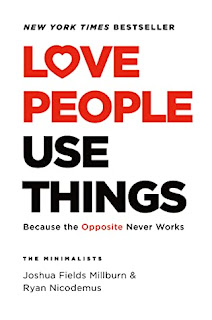
YouTube Review - Love People, Use Things


Title:   Love People, Use Things
Author:  Joshua Fields Millburn, Ryan Nicodemus
Publisher:  Celadon Books
Genre:   Self-Help
Format:  Print ARC
No. of Pages:   336
Date of Publication:   July 13, 2021
My Rating:    5 Stars

DESCRIPTION:

How might your life be better with less?

Imagine a life with less: less stuff, less clutter, less stress and debt and discontent—a life with fewer distractions. Now, imagine a life with more: more time, more meaningful relationships, more growth and contribution and contentment—a life of passion, unencumbered by the trappings of the chaotic world around you. What you’re imagining is an intentional life. And to get there, you’ll have to let go of some clutter that’s in the way.

In Love People Use Things, Joshua Fields Millburn and Ryan Nicodemus move past simple decluttering to show how minimalism makes room to reevaluate and heal the seven essential relationships in our lives: stuff, truth, self, money, values, creativity, and people. They use their own experiences—and those of the people they have met along the minimalist journey—to provide a template for how to live a fuller, more meaningful life.

Because once you have less, you can make room for the right kind of more.


MY THOUGHTS:


ABOUT THE AUTHORS:


Netflix stars and New York Times–bestselling authors Joshua Fields Millburn and Ryan Nicodemus, known to their audience as The Minimalists, help millions of people live meaningful lives with less through their website, books, podcast, and films. They have been featured in the Wall Street Journal, Time magazine, and GQ, and they have spoken at Harvard, Apple, and Google. With more than 100 million downloads, The Minimalists Podcast is one of the most popular shows on Apple Podcasts. Both raised in Dayton, Ohio, they currently live in Los Angeles.
     

Monday, June 14, 2021

Review - Remember

Title:  Remember
Author Lisa Genova
Publisher:  Harmony
Format:  Kindle ARC
No. of Pages:   256
Date of Publication:   March 23, 2021
My Rating:   5 Stars
DESCRIPTION:

A fascinating exploration of the intricacies of how we remember, why we forget, and what we can do to protect our memories, from the Harvard-trained neuroscientist and bestselling author of Still Alice.

Have you ever felt a crushing wave of panic when you can't for the life of you remember the name of that actor in the movie you saw last week, or you walk into a room only to forget why you went there in the first place? If you're over forty, you're probably not laughing. You might even be worried that these lapses in memory could be an early sign of Alzheimer's or dementia. In reality, for the vast majority of us, these examples of forgetting are completely normal. Why? Because while memory is amazing, it is far from perfect. Our brains aren't designed to remember every name we hear, plan we make, or day we experience. Just because your memory sometimes fails doesn't mean it's broken or succumbing to disease. Forgetting is actually part of being human.

In Remember, neuroscientist and acclaimed novelist Lisa Genova delves into how memories are made and how we retrieve them. You'll learn whether forgotten memories are temporarily inaccessible or erased forever and why some memories are built to exist for only a few seconds (like a passcode) while others can last a lifetime (your wedding day). You'll come to appreciate the clear distinction between normal forgetting (where you parked your car) and forgetting due to Alzheimer's (that you own a car). And you'll see how memory is profoundly impacted by meaning, emotion, sleep, stress, and context. Once you understand the language of memory and how it functions, its incredible strengths and maddening weaknesses, its natural vulnerabilities and potential superpowers, you can both vastly improve your ability to remember and feel less rattled when you inevitably forget. You can set educated expectations for your memory, and in doing so, create a better relationship with it. You don't have to fear it anymore. And that can be life-changing. 


MY THOUGHTS:

Lisa Genova has published five fictional novels. Her debut novel Still Alice (2007) is the heartbreaking story of 50-year-old Harvard professor Alice Howland's early onset Alzheimer's disease. Her sophomore book was Left Neglected (2011), is the story of Sarah Nickerson's life after an accident causes a traumatic brain injury that caused the complete loss of the left side of her body. Love Anthony (2012) was the story told from a very sad point of view - that of an autistic unknown boy.  Inside the O'Briens (2015) told the sad story of forty-four-year-old police officer Joe O'Brien's battle with Huntington's disease. 
And, lastly, Every Note Played (2018) was the tragic story of concert pianist Richard's devastating battle with ALS, losing more and more use of his body. 

The five titles mentioned were all fictional, and I read them after reading the nonfiction book that is the focus of this review - Remember: The Science of Memory and the Art of Forgetting. Until I got this ARC for review, I had not heard  of the author. Reading this book and how memory and how the brain works to remember was explored by neuroscientist Lisa Genova. I was so enthralled with this work, that I had to go back and read the fictional titles mentioned above. Ms. Genova is a highly respected expert involving the nervous system and the brain. 

With the fictional titles, various aspects of the brain and particular injuries were explored. With regard to Remember, the exploration of memory was brilliantly discussed. Things as simple as to how we often try to remember if we shut the stove off, where we put our keys, if we locked the door, etc., After a certain age, are we all victims of early Alzheimer's or dementia, or is growing forgetfullness normal? In fact, this book helps us to find ways to remember, even though we all overload our brain on a daily basis. Ms. Genova goes further in this book. She shows readers how we make memories and what we do to remember the most innocuous of things. 

Although nonfictional this did not read like a self-help book to me. Instead, it was a very good, in-depth almost conversational discussion as to how memories are formed and how we can retrieve them. In fact, sometimes our very environment can influce our ability to remember. I loved learning more about the difference between short-term memory and long-term memory. Or why we can have clear memories from certain dates in our past, but no memories of surrounding dates. I found all of this to be quite intriguing, so much so that I went and read all the books mentioned above. 

Many thanks to Harmony and to NetGalley for this ARC for review. This is my honest opinion.


ABOUT THE AUTHOR:

Lisa Genova graduated valedictorian, summa cum laude from Bates College with a degree in Biopsychology and has a Ph.D. in Neuroscience from Harvard University.

Acclaimed as the Oliver Sacks of fiction and the Michael Crichton of brain science, Lisa has captured a special place in contemporary fiction, writing stories that are equally inspired by neuroscience and the human spirit. She is the New York Times bestselling author of the novels STILL ALICE, LEFT NEGLECTED, LOVE ANTHONY, INSIDE THE O'BRIENS, and EVERY NOTE PLAYED. 

Her first work of nonfiction, REMEMBER: The Science of Memory and the Art of Forgetting, published March 2021, was an instant New York Times bestseller.

STILL ALICE was adapted into a film starring Julianne Moore, Alec Baldwin, Kristen Stewart, Kate Bosworth and 

Hunter Parrish. Julianne Moore won the 2015 Best Actress Oscar for her role as Alice Howland. Film adaptations for INSIDE THE O'BRIENS and EVERY NOTE PLAYED are in development.


Friday, July 19, 2019

Review - Nasty People

Title:   Nasty People
Author:  Jay Carter
Genre:   Self-Help
Publisher:  McGraw-Hill Education
Format:  Print / ebook
No. of Pages:   105
Date of Publication:  May 26, 2003 (revised)
My Rating:  4 Stars

DESCRIPTION:

Fourteen years since its first publication, the bestsellerNasty People has been revised and updated to cover the motivations of nasty people, how to avoid confrontation with a nasty boss, how to handle a nasty spouse, and much more, including:

How to break the cycle of nastiness

A new understanding of personality disorders and depression

Narcissism, nasty behavior, and self-doubt

Nasty people and self-validation

The role adrenaline plays in nasty behavior and our responses to it.

Everyone knows a person who has been hurt, betrayed, or degraded by nasty individuals or has experienced it themselves. In three books, Jay Carter, Psy. D., shows readers how to stop this cycle of overt and covert abuse, without resorting to nasty tactics. Now for the first time, this series is released together to cover all areas of dealing with difficult people. With straight-talking advice, real-life anecdotes, and psychology that makes sense, Carter explains how to handle and stop painful behavior that harms both the perpetrator and the victim.

SELECTED QUOTES:

Invalidation is what I used to call “putting other people down to bring yourself up.”

Only 1 percent of us intentionally spreads this misery to manipulate and control others. Twenty percent of us do it semiconsciously as a defense mechanism. The rest of us do it only occasionally, usually unconsciously and unintentionally.

The invalidator is underhanded, and the person being invalidated is often unsuspecting except for knowing that he feels bad.

The invalidator may persist in invalidating you until you succumb.

An invalidator will pick out the qualities about you that are most important to you and then tear them apart.

An invalidator will listen to you share something that you don’t like about yourself and then later use it against you.

If she really thinks you are onto her, she may apologize and then not invalidate you again … until later when you are unsuspecting.

(Hitler) never killed anyone face to face but got his followers to do it.

The more clever invalidators don’t use their powers until it’s absolutely necessary.

The invalidator can appear to be quite friendly for a very long time.

Then he will just make you look bad in front of everyone for a long time.

He might do all this with information you told him about yourself in confidence, when he so endearingly listened to you.

The invalidator has many methods at his or her disposal, including uncertainty; projection; generalization; judgment; manipulation; sneak attack; double message; cutting communication; building you up, cutting you down; and the double bind.

For example, the invalidator will suddenly become understanding, lovable, and very nice to you. Things will remain this way until you become trusting.

The invalidator puts you in a position where you are wrong if you do and wrong if you don’t.

But he saved up this extreme type of threat, only calling on it on special occasions when he needed a large portion of control.

I have never met a conscious invalidator who was not narcissistic. The rest of us don’t mean to be narcissistic and we don’t mean to invalidate.

In his least obvious personality, the invalidator appears to be your good buddy. He always has some negative thing to tell you “in good faith.” He loves to be “honest” and “truthful.”

He gossips about you behind your back and is secretly jealous of you.

He pays you compliments that are really double messages, insinuating that you are paranoid if you confront him on his double messages.

He might become enraged when you did something against his will or against his opinion.


MY THOUGHTS:

This review is written based on social media experiences that I have seen over the past nine months. Before I begin this review, I just want to indirectly quote something I heard: Who are you more apt to believe? Ten people telling you about one person, or one person telling you about ten people?

When bullying - and yes - this is why I read this book - occurs, exclusion, lies and defamation of character happens. In this book by Jay Carter, people who attack other people are not referred to as bullies, but as invalidators, as the above quotes show. One thing the author does is to compare these invalidators to Hitler. More directly, they are often narcissistic. They are often sociopaths.

Before I go on, I just want to highly recommend anyone on any side of this issue go to Amazon and purchase this book. My views on this matter will come as close to this book as possible. As a matter of fact, as a reviewer, that is the way I write reviews. Simply put.

However, I mentioned that I read this book based on my experiences. So, there will be a personal flair to this review. 

One section of this book is called "Portrait of an Invalidator". Here, Hitler's history is briefly relayed. He is the perfect example of a controlling invalidator. As a young man, he was a beautiful artist, a writer, and saved many lives in the army. However, at some point, as history clearly shows, the man changed. There is no point in me stating what he did. The entire world knows. So, then, why include him in this book? In this review?

He was a clever, clever man. People believed him. People were swayed by him. In some ways he kept his own hands clean by having people carry out all of his acts. He was the ultimate puppet master. There are people today who have an obsessive need to be in control, to manipulate people, situations and environments. In so doing, people's lives can be destroyed, sometimes with very few words. Lives can be decimated by telling people lies about others, by gathering people together so that they can spread these lies further.

Another way people can be hurt is by attacks, and these attacks are often subtle. Other times, the attacks are direct, especially when a direct incident carefully orchestrated can play out, making a single person look bad in front of a lot of people. When done right, several people can change their view of a single person based on a single event.

In some cases, truths can be used against people. Someone may genuinely confide in someone. That someone has another friend. They genuinely, sometimes unwittingly, share confidences. If the person that they are sharing with is an invalidator, as it were, it can be quite easy to destroy someone's reputation.

In one of the quotes above, an invalidator's methods are many. These include judgment, manipulation, exclusion, buddying up and then cutting someone down. Sadly, the victim if such actions may never see it coming.

Then there are people who see it happening. Clearly. They see victims being set up. Being hurt. But because the chief invalidator has developed a high level of power, fear creeps in and people are afraid to speak up. If they do, they know for a fact that they themselves will become a victim.

Lastly, people's values begin to change. They may, on their own, never intend to hurt another person. But, they begin to be swept up, influenced. Before they know it, gradualism has become part of their fiber. By then, it is too late to change what is happening, so they go along with actions that make them feel uncomfortable.

What can be done? For one thing, victims must learn to know their own value, their own strengths. They know the truth about themselves. Do they need to prove their truth? Their worth? They really don't, but often become so desperate that they will try their darndest to prove their innocence. As difficult as it is, they must become strong enough not to be hurt by Nasty People.

The other thing that can be done? It is not becoming an invalidator. Step away. Do not become a nasty person. Once one becomes a nasty person, an invalidator, a bully, that reputation will be very hard to shake off.


MY FINAL THOUGHTS:

Let's stop walking on eggshells. Protect ourselves. Watch our associations, our friendships. Take care of US, take care of our families. Know our own truth.

The next self-help book in my sights:


ABOUT THE AUTHOR:

Dr. Carter has made over 100 appearances on national television and radio in the USA, Canada, Australia, and United Kingdom (BBC-TV in London), including the "Larry King Show", and the "Montel Williams Show". He consulted with Reader's Digest for an article on "Mean People", and has consulted with the Oprah Winfrey Show. He has appeared in Oprah magazine and Cosmopolitan several times. He was a talk show host on Berks Community TV for four years.

Psychologist, Best Selling Author, Speaker, and Film Maker (awards for "Bipolar Light" and the "Bully Caterpillar" pilot film), Dr. Carter is a professional speaker doing seminars and workshops for organizations around the country. He is the author of the best selling book, "Nasty People", which has sold over one million copies in the USA and around the world. His new book is the "Complete Idiots Guide to Bipolar Disorder" via Alpha Books (Penguin Group)

Dr. Carter is a sought after speaker. He is a regular speaker for Cross Country Education (see web site link) where his audience are Social Workers, Counselors, Educators, Medical Doctors, Nurses, Nurse Practitioners, and Psychologists. He has appeared before colleges, universities, and institutions like Loyola University, Temple University, United Way, IBM, the Association of University Women, and Union Carbide. He was on the board of directors for the Sexual Assault Resource Center and Women in Crisis (Battered Women). He was on the PA subcommittee for Government Drug and Alcohol Services. He is past president of the Berks Area Psychological Society. He was an executive manager for IBM Corporation. He is currently working on a full feature animated film, expanding the award-winning "Bully Caterpillar" story.


web | facebook